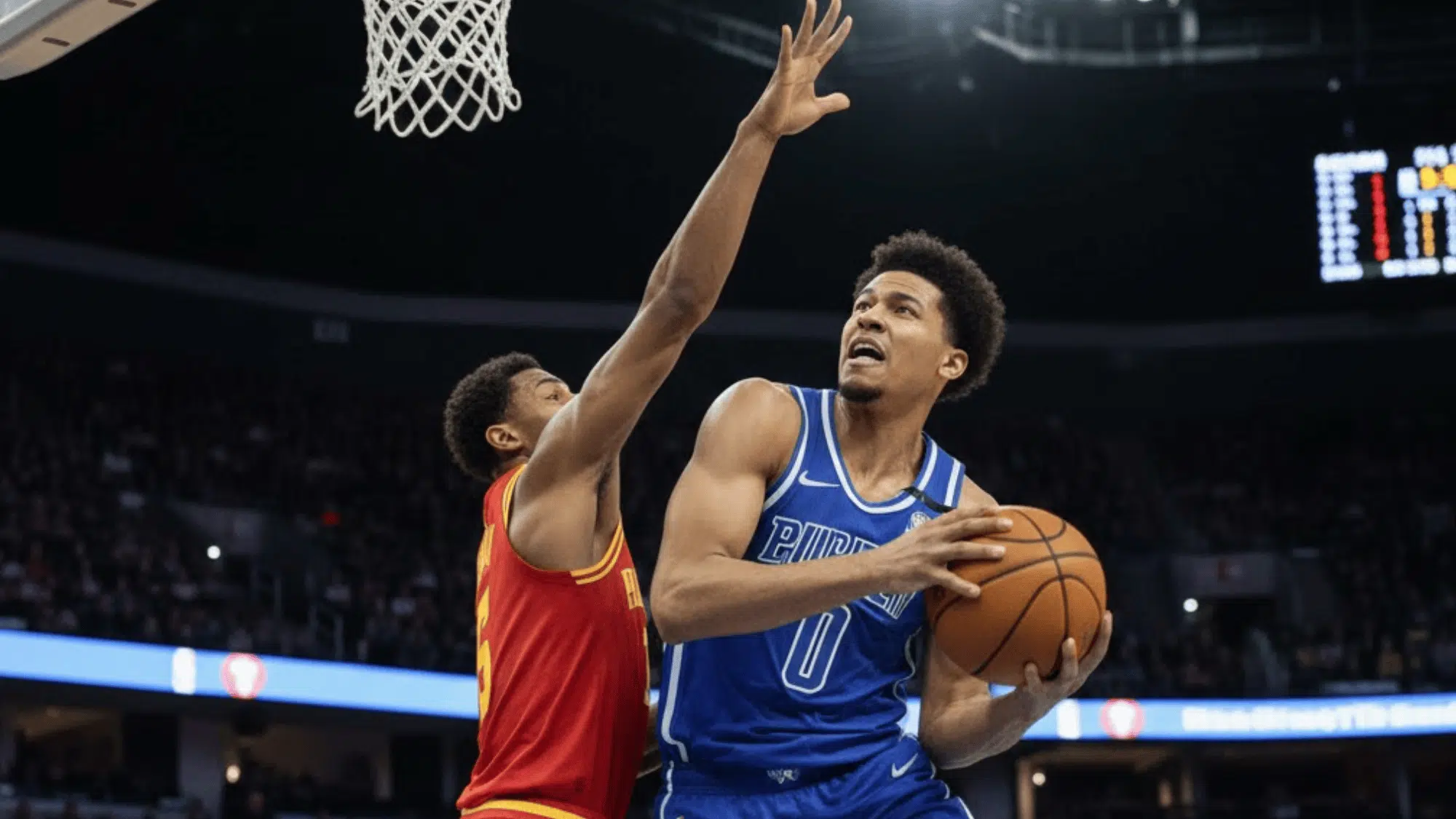


Every American sports fan knows the feeling: the bracket looks clean on Monday, then looks ridiculous by Sunday night. That is the strange beauty of Championship Runs. They seem obvious only after the parade, when every bounce, injury, hot streak, and coaching call gets turned into a neat story. Before that, the path is messy, emotional, and full of traps that models, analysts, and die-hard fans all struggle to see clearly. A team can look unbeatable in March, tired in April, reborn in May, and legendary in June. That is why trusted sports coverage, sharp fan analysis, and platforms like digital media networks matter when people try to make sense of what they are watching. In the United States, where playoff pressure stretches across the NBA, NFL, MLB, NHL, college football, and March Madness, prediction is never only about talent. It is about timing. It is about matchups. It is about who survives the weird middle of a season when certainty starts to crack.
Why Playoff Uncertainty Starts Before the Postseason
The hardest part of reading a title chase is that the story begins long before the official bracket appears. Regular-season records give fans something to hold onto, but they rarely tell the whole truth. A top seed may have feasted on weak opponents, while a lower seed may have spent months learning how to win ugly against elite teams. Playoff uncertainty grows in that gap between what the standings say and what the games reveal.
American sports make this even harder because each league rewards a different kind of survival. The NFL turns one bad Sunday into an offseason. The NBA lets a seven-game series expose every flaw. MLB asks teams to stay sharp through a marathon, then flips everything into short bursts of pressure. The NHL brings chaos on skates, where one hot goalie can bend an entire bracket.
Why Regular Season Records Can Mislead Fans
A win total can hide more than it explains. A 58-win NBA team may look dominant, but if those wins came from depth, pace, and bench scoring, the playoffs can shrink those advantages. Rotation minutes tighten. Opponents scout every habit. The same team that looked fast in January can look ordinary when every possession slows down.
Football gives a sharper version of the same problem. An NFL team can pile up wins through a soft schedule, turnover luck, or an early-season injury break against opponents. Then January arrives, and the opponent across the field has a defensive line built to attack the exact weakness that was covered all year. Suddenly, the favorite looks less like a giant and more like a team with one exposed seam.
College basketball may be the clearest warning. A team can enter March Madness with a clean record and national attention, then run into an underseeded opponent with older guards, no fear, and a shooting night that breaks the bracket. Playoff uncertainty does not wait for the championship round. It often shows itself in the first uncomfortable matchup.
How Strength of Schedule Changes the Picture
Schedule context turns a plain record into something closer to truth. A team that finishes 11-6 in the NFL after facing elite quarterbacks, road-heavy stretches, and physical division rivals may be more prepared than a 13-4 team that spent the year ahead by halftime. Hard games leave marks, but they also build habits.
The same idea applies in college football, where national debates often come down to who survived the tougher road. A one-loss team from a power conference may have played more future pros than an unbeaten team from a lighter slate. Fans may hate that argument when it hurts their school, but the field often confirms it.
Strength of schedule also affects public belief. Americans love a clean storyline, and a glossy record sells better than a complicated resume. Yet title paths punish simple thinking. A team that has already seen speed, size, noise, travel, and pressure has fewer new problems to solve when the lights get harsh.
How Matchups Turn Favorites Into Nervous Teams
Once the postseason begins, general strength matters less than specific problems. A team can be better across 82 games, 17 games, or 162 games and still hate one particular opponent. Matchups create discomfort. They force favorites to play outside their preferred rhythm, and that is where underdog teams start to look dangerous.
This is the part fans often miss because reputation is louder than fit. A higher seed may have the bigger star, the better record, and the cleaner highlight reel. None of that guarantees comfort if the opponent has the one defensive look, pitching style, or offensive wrinkle that turns confidence into hesitation.
Why Underdog Teams Can Control the Terms
Underdog teams do not need to be better at everything. They need to drag the favorite into a smaller, stranger game. In the NBA, that might mean switching every screen and daring role players to win from the corners. In the NFL, it might mean controlling the clock, shortening possessions, and keeping an explosive offense cold on the sideline.
Baseball makes this even more dramatic. A wild-card team with two dominant starters can become a nightmare in October because the season no longer asks for balanced depth in the same way. A roster built to survive six months may meet a roster built to terrify hitters for five nights. That is not fair, but postseason sports rarely care about fair.
Underdog teams also carry a different kind of emotional freedom. The favorite often plays to protect an expected future. The challenger plays inside the moment. That edge can vanish fast, but while it lasts, it changes body language, crowd noise, and decision-making.
Why Coaching Adjustments Matter More Than Reputation
A playoff series becomes a conversation between coaches. One side makes a move, the other answers, and the public often notices only after the result looks obvious. A defensive assignment changes. A weaker hitter gets challenged. A tight end gets moved across the formation. The whole game bends.
The best coaches do not chase cleverness for its own sake. They remove comfort. They make a star work earlier in the shot clock, a quarterback hold the ball half a second longer, or a goalie track pucks through traffic. Small changes create larger emotional pressure because great teams are used to dictating terms.
Reputation can even become a trap. A coach with a famous system may trust it longer than the moment allows. Fans call that loyalty. Opponents call it a door left open. In tight postseason settings, the coach who adjusts without panic often beats the coach who waits for talent to solve everything.
Why Momentum Shifts Feel Real Even When They Are Hard to Measure
Momentum is one of the most argued ideas in American sports because everyone feels it, but nobody can hold it still. A crowd gets louder, a bench stands taller, and a player who looked tight suddenly wants the ball. Momentum shifts are not magic. They are changes in confidence, pressure, and decision speed happening in public.
The tricky part is that momentum can lie. A team may dominate five minutes and still lose by double digits. A home crowd may roar through a comeback, then watch one turnover drain the building. Still, dismissing momentum shifts completely misses how athletes experience pressure in real time. Humans are not spreadsheets with sneakers.
How One Play Can Rewire a Game
A single moment can change what both teams believe is possible. Think of a blocked punt in an NFL playoff game, a chase-down block in the NBA Finals, a grand slam in October, or an overtime goal in the Stanley Cup Playoffs. The scoreboard changes, but the deeper shift happens in the chest.
Players start making different choices after those moments. The team that gained energy may cut harder, defend tighter, and take cleaner risks. The team that absorbed the blow may begin thinking instead of reacting. That tiny delay is enough for the next mistake to appear.
Momentum shifts matter most when they alter identity. A team built on calm can start rushing. A team labeled soft can start hunting contact. A club known for poor late-game execution can suddenly believe it belongs in the final minutes. Prediction models struggle here because belief does not fit neatly into a box score.
Why Home Crowds Shape More Than Noise
Home advantage is not only about volume. It is about rhythm. Players sleep in familiar beds, shoot in familiar sightlines, and feed off a crowd that reacts before the national audience understands why. In American playoff settings, that connection can turn a normal possession into a civic event.
Crowds also pressure officials, even when nobody wants to admit it too loudly. A borderline call after thirty seconds of roaring feels different from the same call in a quiet arena. Officials are trained professionals, but they still work inside human environments. Noise does not decide every call, yet it colors the room.
The counterintuitive part is that home pressure can hurt the favorite. When the local crowd expects a smooth win, every missed shot or early deficit creates tension. Players sense that shift. A nervous home building can sound loud and still feel heavy.
How Injury Impact Changes the Entire Title Map
No factor turns certainty into confusion faster than injury impact. A title contender can spend months building timing, trust, and rotations, then lose one player and become a different team overnight. The public often talks about injuries as bad luck, but in title races, health is part of the competition.
Modern American sports have made this issue harder to read. Teams manage minutes, track workload, and guard medical details closely. A player may be listed as available while moving at 85 percent, and that missing burst can change a series. Injury impact lives in the space between “playing” and “playing like himself.”
Why Star Health Changes Every Role Around It
A star injury rarely affects one job. It changes everyone’s job. When an NBA scorer loses lift, teammates face tougher shots late in the clock. When an NFL quarterback has a limited shoulder, defenses crowd routes they would normally fear. When an MLB ace loses command, the bullpen starts warming before the game has a shape.
Role players often suffer the most from this shift. A shooter who thrives on clean passes now has to create off the dribble. A linebacker who depends on a dominant edge rusher suddenly has blockers climbing into his lap. The injury may belong to one player, but the stress spreads across the roster.
Fans tend to judge the replacement first, which is understandable but incomplete. The deeper question is whether the team can still play its preferred style. When health removes identity, talent alone may not rescue the run.
Why Depth Can Beat Star Power Late
Depth sounds boring until the postseason turns into a test of bodies. A team with seven reliable players may look better on paper than a team with ten useful ones, but long series expose fatigue. Legs go first. Then focus follows.
This shows up across every major U.S. sport. NHL teams need third-line players who can survive hard minutes. NBA teams need bench defenders who will not get hunted every possession. MLB teams need relievers who can enter with traffic on base and not blink. NFL teams need backup tackles, corners, and special-teamers who can handle sudden pressure.
The surprise is that depth does not always win by producing heroes. Sometimes it wins by preventing collapse. The eighth man keeps a lead from slipping. The backup catcher handles a tense inning. The rotational defensive lineman turns a tired fourth quarter into one more stop. That is not glamorous. It is often the difference between almost and forever.
Why the Mental Side Makes Predictions Break
After matchups, health, and momentum, the final layer is the hardest to measure: how teams carry pressure. The best roster does not always become the strongest group under stress. Some teams tighten when history gets close. Others sharpen. That gap is why Championship Runs resist clean prediction even after every statistic has been argued to death.
Pressure changes how time feels. A free throw with eight minutes left is not the same shot as one with eight seconds left. A routine ground ball in May is not the same ball in Game 7. Athletes train for those moments, but training does not erase the weight of knowing millions of people are watching.
Why Experience Helps, But Never Guarantees Anything
Experience gives teams a map, not a passport. Veterans know travel routines, media noise, and the emotional swings of a long playoff series. They do not panic after one loss. They understand that a bad quarter, inning, or period does not have to become a bad week.
Still, experience can harden into assumption. A team that has won before may expect opponents to fold the way others did. That confidence helps until it turns lazy. Younger teams can punish that gap because they bring speed, hunger, and no memory of past failures.
The smartest teams balance both. They use veteran calm without letting it slow them down. They let younger players bring force without letting the moment scatter them. That blend is rare, which is why repeat titles remain so difficult in the American sports landscape.
How Public Pressure Changes Decision-Making
Public pressure creates a second opponent. Players compete against the team in front of them and the story forming around them. A star labeled a choker may pass too early. A coach criticized for being conservative may force a risky call. A franchise carrying decades of heartbreak can feel the past sitting beside the bench.
Media markets magnify this. Winning in New York, Los Angeles, Boston, Philadelphia, Chicago, or Dallas comes with a different temperature than winning in a quieter city. The games are the same size on the field, but the noise around them is not. That noise can sharpen some athletes and swallow others.
Fans often mistake pressure for weakness after the fact. The truth is harder. Pressure reveals habits. A team that has built trust can keep playing through it, while a team held together by talent alone may start negotiating with fear. That is when predictions fall apart in real time.
Conclusion
The smartest way to watch a title race is to hold your confidence lightly. Believe what the season has shown you, but leave room for the strange turn, the bad matchup, the quiet injury, the role player who catches fire, and the favorite that suddenly looks human. Sports remain addictive because the ending refuses to obey the setup. Championship Runs are not random, but they are fragile, and that distinction matters. You can study records, rosters, odds, and trends, yet the final answer still belongs to players making choices under heat. That is the lesson fans should carry into every postseason: prediction is useful, certainty is dangerous. The next time a bracket, playoff board, or title pick looks obvious, slow down and ask one better question: what could make this team uncomfortable when the season stops being polite?
Frequently Asked Questions
Why are championship predictions so often wrong?
Predictions fail because playoffs compress pressure, expose matchup flaws, and punish small weaknesses. A team can look dominant across a full season, then face one opponent that attacks its worst habit. Health, travel, officiating tone, and late-game confidence can all bend the result.
What makes playoff uncertainty different from regular season uncertainty?
Playoff uncertainty is sharper because teams see each other repeatedly, pressure rises, and every adjustment carries more weight. Regular seasons allow recovery from bad nights. Postseasons do not. One poor matchup, injury, or cold shooting stretch can reshape an entire title path.
How do underdog teams upset championship favorites?
Underdog teams win by narrowing the game. They slow pace, attack a specific weakness, force uncomfortable shots, or turn the favorite’s pressure against it. They do not need more talent across the roster. They need the right plan and enough belief to stay with it.
Why do momentum shifts matter in close games?
Momentum shifts matter because players react to pressure, noise, and confidence. One big play can make a team move faster, defend harder, and trust its instincts. The effect may not last, but in a tight game, a few changed possessions can decide everything.
How does injury impact change a playoff series?
Injury impact changes spacing, roles, rotations, and confidence. Even when a star keeps playing, reduced speed or strength can alter the entire team’s style. Opponents notice fast, then force that player and the supporting cast into harder decisions.
Can regular season records predict postseason success?
Regular season records help, but they are incomplete. They show consistency, not always readiness. A strong record may hide a weak schedule, poor late-game habits, or matchup problems. Postseason success depends on how well a team’s strengths survive focused pressure.
Why does coaching matter more during championship races?
Coaching matters more because opponents study every tendency in detail. A good coach changes matchups, rotations, pace, and defensive looks before a weakness becomes fatal. The postseason rewards fast recognition more than loyalty to a plan that no longer works.
What should fans look for before picking a champion?
Fans should look beyond record and star power. Health, matchup fit, defensive versatility, late-game execution, road toughness, and bench trust all matter. The best pick is rarely the loudest team in the conversation. It is the one with fewer ways to break.