
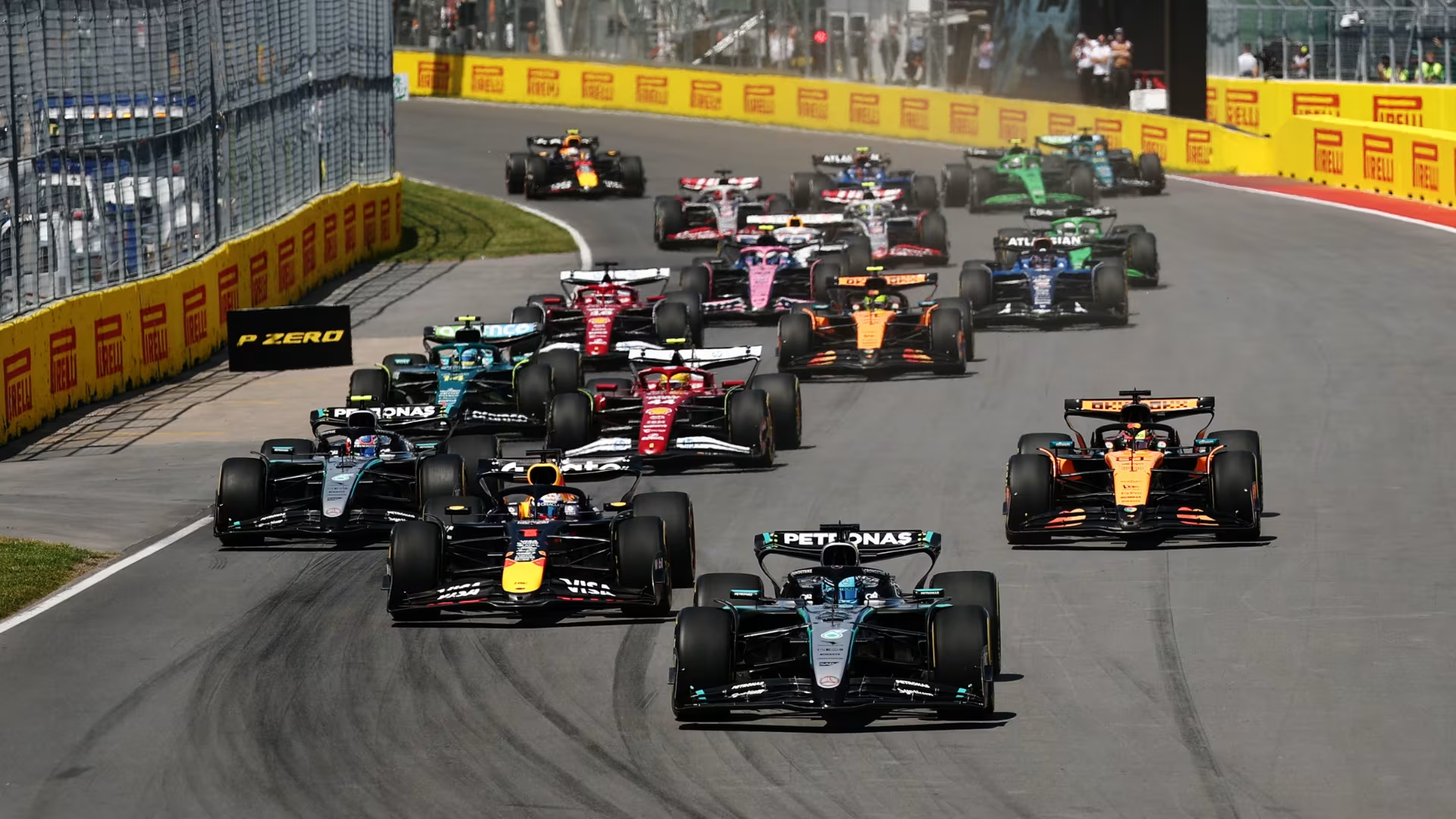
A Formula 1 car can look alive on television and still be trapped in place. Aerodynamic Regulations shape that problem more than raw horsepower, because the fastest car in clean air can become a nervous, sliding mess once it sits behind another car. That is why fans in the United States who found F1 through COTA, Miami, Las Vegas, or Netflix often ask the same fair question: why can the faster driver get close, then stop closing? For readers who follow the business side of racing through motorsport media coverage, the answer sits inside the invisible air between two cars. F1 tried to fix that air with the 2022 rules, which targeted downforce loss and closer racing, but teams learned around the intent. The result was not zero passing. It was something worse: long pressure without a real attack, DRS trains, tyre overheating, and races where the pass happens in strategy software before it happens on track.
When Aerodynamic Regulations Turn Racing Into Waiting
The strange part is that modern F1 did not fail because engineers ignored racing. It failed because they solved the lap-time problem better than the racing problem. The 2022 cars aimed to make following easier by changing how the wake moved behind the car, and early numbers looked promising. Formula 1 said the older cars lost 35% of downforce at about three car lengths and 47% at about one car length, while the 2022 concept cut those losses sharply in its launch model.
Why dirty air in F1 feels worse than fans expect
Dirty air in F1 is not a small gust that makes the steering wheel twitch. It changes how the following car breathes. The front wing sees less stable air, the floor receives weaker flow, and the rear of the car stops giving the driver the calm platform needed to attack a braking zone.
That is why a driver can fly toward the gearbox ahead through a straight, then lose the nose through the next fast corner. You see hope. The driver feels washout. At Austin, Suzuka, Silverstone, or any track with fast direction changes, that gap between what the viewer sees and what the driver feels becomes the whole story.
The non-obvious problem is that the following driver often pays twice. First, the car loses grip. Then the tyres slide, heat up, and lose grip again on the next lap. So a driver may choose not to attack because the failed attack will ruin the next three chances.
The front wing became a traffic manager
The front wing used to be a downforce part fans could understand by sight. Bigger wing, more grip. Smaller wing, more speed. Modern F1 made it a traffic manager for air, and that changed the racing cost.
The 2022 rules narrowed what teams could place on the car and aimed for a specific wake pattern, rather than letting designers stack small aero pieces wherever a legal box allowed them. Racecar Engineering described that shift as a move from broad dimensional limits toward rules that named allowed devices and controlled the flow field more directly.
Yet the front wing still sits first in line. If it cannot control tyre wake cleanly, the floor behind it suffers. If it gets upset by a car ahead, the whole balance shifts. That is why F1 overtaking rules can look simple on paper while the cars behave like they need perfect air to stay brave.
The 2022 Ground-Effect Fix Worked, Then Teams Ate the Margin
The 2022 reset gave F1 a better idea: move more downforce under the car and reduce the wake sprayed into the path of the car behind. Ground effect cars can, in theory, follow better because the floor does more work than the top-body clutter. That theory had merit. The trap was that every team still had one job on Monday morning: find more lap time.
Why ground effect cars did not stay friendly
Ground effect cars depend on the floor staying fed with clean, energetic air. That makes them fast, but it also makes them sensitive. When the air arriving at the floor changes, the driver feels it through the whole car, not through one isolated part.
The 2022 floor rules brought back tunnels, fences, and a shaped underside, while limiting many of the small parts that once built complex outwash. That was a smarter race-car base than the late 2010s machines, but it did not remove the engineer’s instinct to rebuild lost downforce through legal edges, wing shapes, and bodywork details.
Here is the counterintuitive part: cleaner-looking cars can still make ugly air. A sidepod or floor edge does not need to look wild to build a wake that hurts the car behind. The damage often comes from well-hidden efficiency, not obvious clutter.
The field got closer, but the passing did not always follow
A tighter field sounds like a dream. In practice, it can make overtaking harder. If most cars are similar on straight-line speed, tyre life, and energy deployment, the following driver needs a larger mistake to make the pass stick.
That is why the race can feel tense without becoming exciting. You get five cars within a few seconds, each waiting for the one ahead to burn a tyre or miss a braking point. For American viewers used to restarts in NASCAR or late-race cautions in IndyCar, this version of pressure can feel too polite.
The better way to read the 2022 era is not “success” or “failure.” It created closer racing in some windows, then team development narrowed those windows. By late 2025, FIA analysis reported through The Race showed the downforce loss at two car lengths had grown from the original 2022 level to about four times worse in straight-line CFD runs.
DRS Helped Passes, But It Also Hid the Real Problem
DRS gave F1 a clean television answer. Open the rear wing, cut drag, gain speed, pass before the braking zone. It helped. It also trained fans to accept a strange bargain: the sport could keep aero-sensitive cars as long as it gave the chasing driver a button.
Why DRS trains expose weak racing design
A DRS train forms when several cars sit within one second of each other. The first car gets no help. Every car behind gets similar help. Nobody gains enough difference to attack unless someone has better tyres, better battery use, or a mistake ahead.
This is where F1 overtaking rules begin to feel artificial. The problem is not that a driver gets aid. The problem is that the aid often replaces the fight through the corner before the straight. A great pass should begin with pressure, line choice, and nerve. Too often, DRS moves the decision point to a painted activation line.
You can see the difference at tracks like Las Vegas and Monza compared with Monaco. Long straights can make the system look effective. Narrow streets with limited braking zones expose the truth: extra speed means little if the car cannot follow well enough to reach the right place.
Overtaking aids can punish the wrong driver
A faster following car already loses air in corners, overheats tyres, and spends battery trying to stay close. Then, if it uses the tyre too hard while preparing an attack, the lead car may survive by driving clean laps and waiting for the threat to fade.
That sounds fair until you notice the racing incentive. The lead driver can protect position by placing the car in air that harms the chaser. The defender does not need to block every lap. The wake does part of the work.
For a deeper site cluster, this connects well with a Formula 1 strategy breakdown, because the overtake often depends less on one brave move and more on whether the pit wall can free the car from traffic. The race becomes a spacing exercise. Skill still matters, but the car’s air sensitivity decides how often skill can show.
The 2026 Reset Admits the Old Fix Was Not Enough
F1’s next answer is not a simple return to old racing. It is a new mix of smaller cars, active wings, lower drag modes, and battery-based passing support. The FIA says the 2026 cars move to active front and rear wings, with straight mode cutting drag and corner mode restoring downforce. The old DRS idea gives way to a broader aero system, while passing support comes from extra electrical energy when a driver is close enough to the car ahead.
Active aero changes the question, not only the speed
The 2026 package matters because it separates two jobs that DRS blended together. Active aero helps the car manage drag and energy on straights. Overtake Mode gives the chasing driver extra battery help when within range. Formula 1’s own 2026 summary says the rules bring lighter cars, movable front and rear wings, and a burst of added battery power for drivers close to the car ahead.
That may make racing less predictable. It may also make it harder for casual fans to read. A driver might be fast on one straight because of wing mode, energy state, battery deployment, or a lift-and-recharge plan from three corners earlier.
The non-obvious upside is that this could reward drivers who plan attacks across half a lap, not drivers who press one button at the same marker every tour. The risk is that the racing becomes cleaner for engineers but murkier for viewers.
What better rules should protect
Better racing does not mean endless passing. That is a trap. If every defense fails, the pass loses weight. What F1 needs is the chance for a skilled driver to stay close through corners without burning the tyres before the move begins.
That means future F1 overtaking rules must guard the wake as fiercely as they guard safety cells and fuel flow. The rule makers cannot write the first draft, walk away, and hope teams preserve the show. Teams chase speed. They should. The regulator has to keep trimming the tricks that turn clean racing back into dirty air in F1.
A useful companion topic here would be a modern racing technology guide, because active aero, hybrid deployment, and tyre windows now shape wheel-to-wheel racing as much as bravery does. For the official direction of the next rule cycle, the FIA’s 2026 Formula 1 rules overview lays out the core shift toward active aero and battery-assisted attacks.
Conclusion
The painful truth is that F1 did not lose exciting passing because the drivers became cautious. The cars became too dependent on air that only exists when nobody is in front of them. Aerodynamic Regulations tried to repair that with the 2022 ground-effect era, and for a while the sport moved in the right direction. Then development did what development always does. It found speed, even when that speed made the following car suffer again. The next reset has a better chance if F1 treats wake control as a living rule, not a launch-day promise. Active aero and battery help may create new attacks, but the sport should not confuse assisted passing with better racing. The real win is simpler: let the chasing driver arrive at the braking zone with tyres, balance, and belief still intact. That is where brave racing lives. Give fans fewer fake chances and more real ones.
Frequently Asked Questions
Why is overtaking so hard in modern Formula 1?
The chasing car loses grip when it runs in disturbed air from the car ahead. That makes braking, corner entry, and tyre control harder. Even when the car has strong pace, it may damage its tyres before getting close enough to attack.
Did the 2022 F1 rules improve overtaking?
They improved close following at first, especially compared with the previous high-outwash cars. The issue is that teams developed the cars over time and recovered downforce in ways that made wakes harder for rivals again.
What is dirty air in F1?
It is disturbed airflow left behind by a leading car. The following car receives weaker, less stable air over its wings and floor, so it loses downforce. That reduces grip and can make the tyres slide and overheat.
Are ground effect cars better for racing?
They can be better because more downforce comes from the floor instead of complex upper-body parts. Still, they are not magic. If the floor needs clean airflow to work well, traffic can still hurt the following car.
Why does DRS sometimes make overtaking feel artificial?
DRS can turn a pass into a straight-line speed event instead of a corner-by-corner fight. It helps create passing, but it can hide the deeper issue: cars still struggle to follow closely before the straight begins.
Will the 2026 F1 rules replace DRS?
The 2026 rules shift away from traditional DRS toward active aero and a battery-based Overtake Mode. Drivers will use wing modes for drag and cornering balance, while extra electrical energy helps attacks when they are close enough.
Why do F1 cars overheat tyres while following?
A following car slides more when it loses downforce in dirty air. Sliding adds heat to the tyre surface. Once the tyre overheats, grip falls, so the driver may have to back off before making another serious attack.
What would make F1 overtaking more exciting?
The best fix is not unlimited passing. F1 needs cars that can follow closely through corners without destroying tyre life. When a driver can pressure, choose a line, and attack under braking, the pass feels earned.