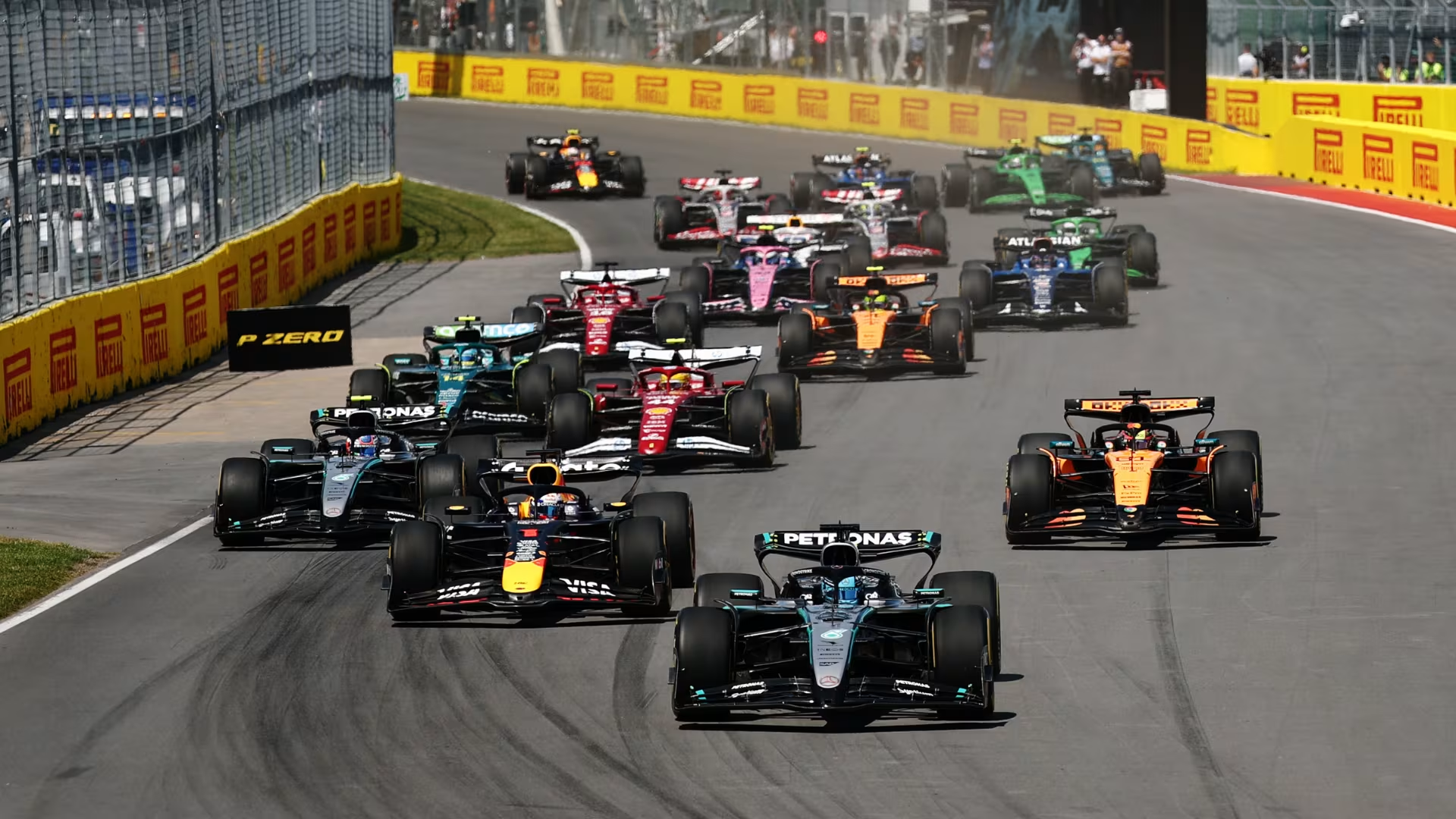


The richest soccer league on earth has reached the point where a “big summer” no longer feels big. Transfer Window Spending has moved from headline drama into a test of whether the Premier League can keep its own market under control. For American fans waking up early on weekends, the splurge can look like ambition, star power, and better TV. That is part of the truth. The other part is colder. Every inflated fee becomes a pressure point on wages, ticket prices, owner patience, and squad planning. When sports business reporting tracks this market, the real story is not only who signed whom. It is whether clubs are buying better futures or renting excitement at prices that cannot hold. The debate matters in the USA because U.S. owners, broadcasters, sponsors, and fans now sit inside the same money loop as the clubs themselves.
Why Transfer Window Spending No Longer Looks Like Normal Growth
For years, the Premier League could defend its buying power with a simple line: revenue keeps rising, so fees rise too. That argument still carries weight. English clubs earn more from media, commercial deals, global attention, and matchday demand than most rivals. Yet the scale has changed the mood. When Deloitte Sports Business Group reported that Premier League clubs spent a record £3.0bn in the 2025 summer window, with gross outlay above £2bn for a third straight summer, the number stopped sounding like healthy growth and started sounding like a warning sign from the dashboard. The league is still rich. That does not mean every club is safe. The harder truth is that record income can hide bad habits for longer than weak income can. By the time a club admits the model is strained, the fees, salaries, and agent costs may already be built into contracts that run for years.
The TV money trap inside Premier League finances
Premier League finances are built on a powerful advantage: the league sells tension better than anyone else. A mid-table match can draw global attention because the product feels fast, expensive, and unpredictable. That is why American viewers can care about a club outside the title race. There is always a story, a new signing, a manager under heat, or a relegation fight with real bite.
The trap is that every club knows the same thing. Staying still feels like falling. If one rival buys a young forward for a fee that would have looked wild five years ago, your club’s board can call restraint “discipline,” but fans may call it surrender. A sporting director then pays not only for the player. He pays for calm, for hope, and for the right to tell supporters that the club is trying.
That is the odd part. The league’s media strength was supposed to protect clubs from panic. Instead, it can feed panic. More income does not always make a club calmer; it can give the club a bigger excuse to gamble. A good finance team can model the risk, yet the stadium mood after two losses can tear through a spreadsheet by Monday morning. Premier League finances now carry a strange emotional cost: clubs are rich enough to act, so fans expect action even when patience would be smarter.
Why football transfer fees rise even when risk rises
Football transfer fees should, in theory, cool down when misses become expensive. In most businesses, a run of poor purchases makes buyers more careful. Soccer bends that logic. A failed striker does not remove the need for goals. It often creates a louder demand for the next striker, at the next higher fee, before rivals get there first.
This is why the market does not behave like a normal auction. Clubs are not buying identical assets. They are chasing scarce people under public pressure, with time running out, while agents and selling clubs know the buyer’s weakness. A striker who fits a system, speaks the right football language, and can handle England’s pace may have only two or three true substitutes. That is not a deep market. It is a locked room. Once a club enters that room with money in hand, the seller controls the air.
A concrete example is the “Premier League tax” American fans hear about. A player with one good season in England can cost more than a similar talent abroad because the buying club feels safer. He knows the league. He knows the travel. He knows the weather, the referees, the noise. The safer bet becomes the dearer bet, and the dearer bet still might fail. That is how football transfer fees keep climbing even while everyone admits the margin for error is thin.
The New Rules Are Catching a Moving Target
Regulation is now part of the show, whether fans like it or not. Points deductions, spending ratios, legal arguments, owner loans, and accounting treatment have entered normal soccer talk. That is strange for a sport sold on emotion. Yet it makes sense. Once clubs spend at this pace, the rulebook becomes a second league table. You can win a signing in July and lose room to move in March. For a U.S. fan used to salary caps and luxury tax talk, this feels familiar, but English soccer still works with promotion, relegation, European qualification, and far messier incentives. The league is trying to control costs without removing the fear that gives its competition life.
What club sustainability rules can and cannot fix
The Premier League’s newer squad cost approach limits certain on-pitch costs against football-related revenue, while UEFA’s rules set a tighter ratio for clubs in Europe. On paper, club sustainability rules push teams toward a cleaner habit: spend in line with income, not owner mood. That sounds fair. It also sounds easier than it is.
Rules can slow the wildest behavior. They can make boards plan earlier, sell before buying, and think harder about wages. They can also punish messy clubs faster than old profit tests did. That part matters because late punishment helps nobody. Fans hate finding out a season’s math was broken after the table already feels settled. Players hate it too, because uncertainty around penalties can turn a dressing room into a courtroom hallway.
Still, club sustainability rules cannot create good judgment. A club can stay inside a ratio and still buy the wrong players. It can sell academy talent to create room, then spend that room on older names with no resale value. Compliance is not wisdom. Sometimes it is a neat set of books wrapped around a poor football idea. The smartest board treats the limit as a guardrail, not a plan.
The accounting illusion fans often miss
The strangest feature of the modern market is that the fee you see is not the cost clubs feel in one season. A £60m player on a five-year contract can be spread across the books year by year. Fans see a giant fee. Accountants see an annual charge plus wages and add-ons. Both are right, but neither tells the whole story alone.
This creates an illusion. A club can look bold in the market while claiming its yearly numbers remain under control. The problem arrives later, when several “manageable” deals stack on top of each other. Suddenly, the club has a squad full of contracts that were easy to explain one by one and hard to escape together. The bill does not always explode. Sometimes it hardens.
For readers who follow European football finance trends, this is where the drama sits. The danger is not one foolish deal. It is a chain of deals that each looked defensible when signed. A club does not need one reckless summer to lose flexibility. It can lose it by being mildly wrong every year. That is the part many fans miss because the bad decision rarely arrives wearing a villain’s coat.
What This Means for American Fans, Owners, and Media Money
The Premier League is not a distant English business anymore. American investment, U.S. broadcast demand, preseason tours, merchandise sales, and social media audiences all help shape the money mood around the league. A fan in Dallas or Philadelphia may never buy a season ticket in London, but that fan still adds value through attention. Clubs know it. Sponsors know it. Owners know it too. That attention does not sit outside the market. It travels back into the price of players, the tone of boardrooms, and the pressure on managers.
Why U.S. viewers are part of the price signal
American fans often enter the league through stars, shirts, highlights, and club identity. That makes signings feel like content as much as team building. A new winger can sell hope before he scores a goal. A young midfielder can fill a summer of debate before he plays one league minute. This is not fake interest. It is modern fandom, and clubs have learned to feed it.
The non-obvious part is that U.S. attention does not need to demand spending directly to reward it. Search traffic rises. Podcasts talk. Fan channels clip training footage. Supporters argue over lineups before preseason. The market gets a small burst of oxygen each time a club buys a name people want to discuss. For ownership groups, that burst can look like proof that bold buying has marketing value beyond the pitch.
That helps explain why restraint is hard to sell. A club that refuses an inflated deal may be acting wisely, but wisdom does not trend as well as a medical photo and a scarf. This is where football transfer fees turn into media events. The fee becomes part of the announcement, part of the status, part of the proof that the club belongs in the big conversation. The player is a sporting asset, but the purchase is also a signal to the world.
The player trading model has started to eat itself
Many clubs now speak the language of player trading. Buy young, improve, sell high, repeat. In theory, that model protects a club from debt and keeps the squad fresh. In practice, too many teams chasing the same kind of player can wreck the bargain. The undervalued 20-year-old is not undervalued once half the league is calling.
Brighton became the example everyone studied because its recruitment machine found value before richer clubs moved. The lesson many copied was not “build a better scouting culture.” It was “buy young talent before others do.” Those are not the same lesson. One is a method. The other is a crowd. Once the crowd arrives, the old edge turns into a bidding war with nicer language.
American sports fans may see a loose parallel with draft-pick obsession. Once every front office prizes youth and upside, the price of youth and upside rises. The edge shrinks. Then clubs pay premium fees for players who are still projects, which means the risk has not gone away. It has been renamed potential. That word can cost a fortune when five clubs believe the same teenager will solve five different problems.
The Breaking Point May Look Less Dramatic Than Fans Expect
People often imagine a financial crash as a single loud moment: a club folds, a points deduction shocks the league, or a billionaire owner walks away. That could happen, but the more likely pressure point is slower and more boring. Margins narrow. Mistakes hurt longer. Squads get harder to reshape. Fans grow angry because the club spent a lot and still looks unfinished. This is how stress usually enters strong businesses: not through one thunderclap, but through decisions that leave less room for the next decision. A club can still look rich from the outside while its choices inside the building become narrower, slower, and more political.
Why a slow squeeze beats a sudden crash
A slow squeeze is more dangerous because it can hide behind ambition. A club signs four players, improves the wage bill, sells one academy graduate, and tells fans the plan is under control. The team finishes ninth. The next summer, the same club needs a center back, a No. 6, and a forward because last year’s plan solved only half the problem.
No alarm rings. No one says the project has failed. They say it needs backing. That phrase is where risk lives. Backing can mean support for a smart plan. It can also mean throwing new money at old uncertainty because admitting the first plan failed would hurt too much.
This is the counterintuitive point: the Premier League may not be most vulnerable when clubs look reckless. It may be most vulnerable when clubs look professionally aggressive. The press release is tidy. The recruitment chart is polished. The manager says the new signing fits the model. Then the player takes a year to settle, the wage bill stays, and the next window arrives with another hole. The club has not collapsed. It has become harder to fix.
How smarter recruitment can protect the league’s pull
The answer is not for clubs to stop buying. That would weaken the league’s appeal and hand talent to rivals. The better answer is to separate squad building from summer theater. A club should know which positions matter before the market opens, which prices are walk-away prices, and which academy players deserve room before a new deal blocks them.
Good recruitment often looks dull at first. It means saying no. It means signing the second-choice player because the first-choice price lost touch with sense. It means accepting that a quiet window can be stronger than a loud one. Fans may hate that in August. They may thank it in April. The smartest clubs also protect wage ladders, because a wild salary can upset a dressing room faster than a wild fee upsets a balance sheet.
For anyone studying Premier League club ownership models, the clubs worth trusting are not always the ones with the biggest gross spend. They are the ones with repeatable logic. They buy players who fit the coach, the wage plan, and the next two windows. That is less glamorous than breaking a record. It is also how a club stays dangerous without letting the market own it. The league’s future strength may come from clubs that learn to make boring decisions before exciting ones.
Conclusion
The Premier League’s wealth is still its superpower, but superpowers can become habits. Clubs have trained fans to read ambition through receipts, and now every board lives with the monster it helped build. The next stage of Transfer Window Spending will test whether English soccer can keep its edge without turning every summer into a financial arms race. The answer will not come from one rule or one owner. It will come from clubs learning to treat restraint as a football skill, not a public relations problem. American fans should care because the same money cycle that brings stars to their screens can also make clubs shorter-term, twitchier, and less patient with development. The league does not need less ambition. It needs cleaner ambition. Spend for a plan, not for applause.
Frequently Asked Questions
Why are Premier League clubs spending so much on players?
High broadcast income, global fan demand, rich owners, and fear of falling behind all push clubs to pay more. The league’s depth also matters. Mid-table teams can outbid famous European clubs, so sellers raise asking prices when an English club enters talks.
Is Premier League spending becoming unsustainable?
It can become unsustainable when fees and wages grow faster than reliable income. The danger is not only debt. It is reduced flexibility. A club with too many expensive contracts may struggle to refresh the squad without selling key players.
How do football transfer fees affect ticket prices?
Fees do not create a direct one-to-one ticket rise, but they add pressure to the whole budget. Clubs chasing higher income may push premium seating, memberships, merchandise, and matchday packages harder, especially when wages and amortized costs keep climbing.
What are club sustainability rules in simple terms?
They are financial limits meant to tie football costs to club income. The goal is to stop teams from spending far beyond what their business can support. They focus on costs such as player wages, transfer charges, and related squad expenses.
Why do American fans care about Premier League finances?
U.S. fans help drive global value through viewing, subscriptions, merchandise, travel, and online attention. That money supports better squads, but it also raises pressure on clubs to keep buying names that create excitement across international markets.
Can Premier League clubs keep outspending Europe?
They can for a while because the league earns more across many income streams. The gap may narrow if rules bite harder, broadcast growth slows, or European rivals sell smarter. Long-term dominance depends on judgment, not spending power alone.
Do expensive transfers make teams better?
Some do, but price is not proof of fit. A costly player can fail if the role, coach, dressing room, or league tempo does not suit him. The best clubs buy for a clear job, not for the loudest market signal.
What is the smartest way for clubs to control spending?
Set walk-away prices before talks begin, protect wage structure, invest in scouting, and keep pathways open for young players. Clubs also need patience. Buying a replacement for every short-term problem can create a squad full of expensive compromises.