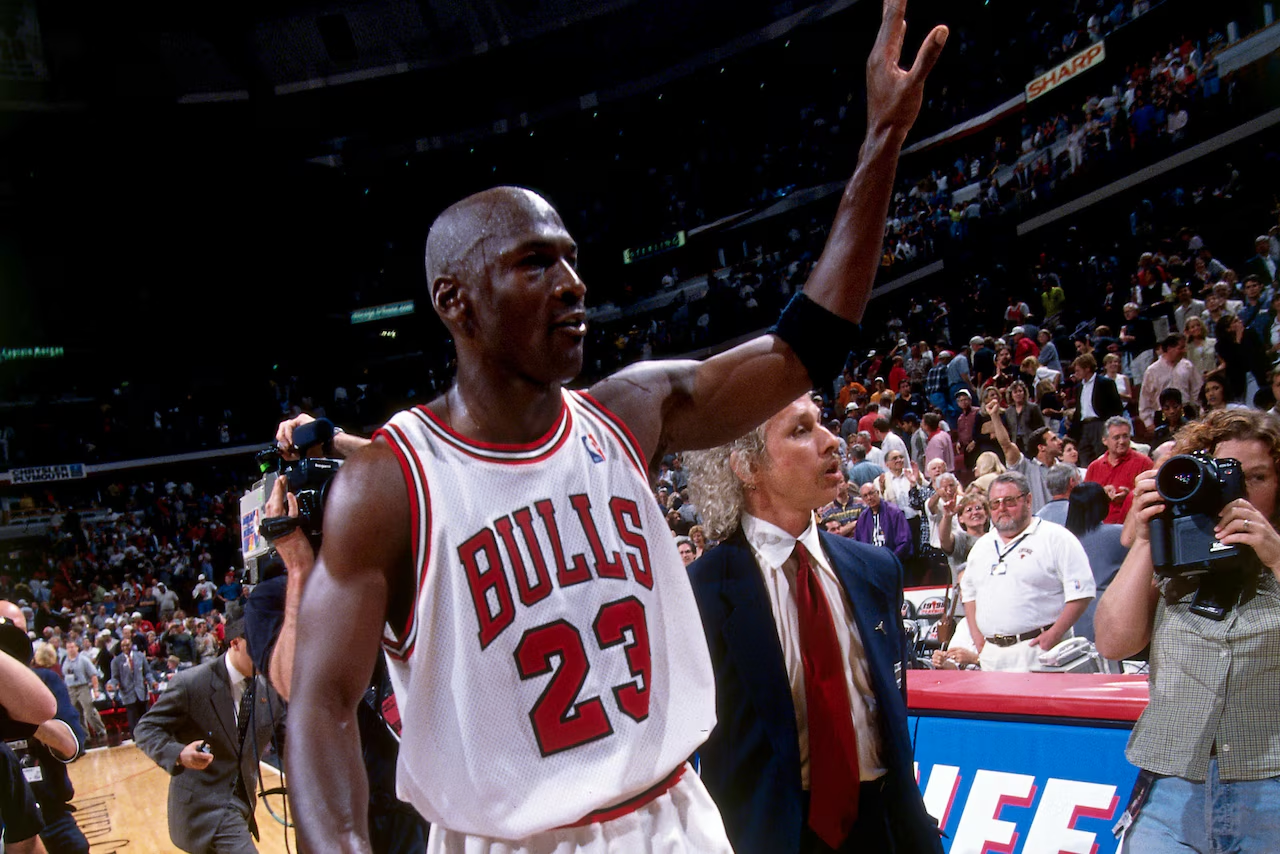

A stadium can change before anyone scores. You feel it in the parking lot, hear it in the chants, and see it in the way strangers start acting like neighbors. Game-day energy turns a regular matchup into something people remember years later because it gives every play a larger pulse. Across the USA, from high school football fields in Texas to NBA arenas in California and college basketball gyms in North Carolina, fans do more than watch. They help build the emotional weather around the game. That atmosphere affects players, families, local businesses, and even people following from home. For teams, media groups, and community brands trying to understand how attention gathers around live sports, resources like sports event visibility can help explain why the right moment travels far beyond the scoreboard. The truth is simple: a great game becomes unforgettable when the people around it make it feel bigger than the clock.
Why Game-Day Energy Starts Before the First Whistle
The strongest sports memories rarely begin at kickoff, tipoff, or first pitch. They start hours earlier, when streets fill with jerseys, radios carry pregame talk, and families pack coolers like they are preparing for a neighborhood holiday. That early build matters because it gives fans time to emotionally enter the event before the game demands their attention. A live crowd atmosphere does not appear out of nowhere. It grows from anticipation, ritual, and the shared belief that something worth seeing could happen today.
How Tailgates Turn Ordinary Places Into Emotional Landmarks
A stadium parking lot on a normal Tuesday is plain concrete. On a Saturday in Baton Rouge, Ann Arbor, or Kansas City, that same space can feel like a moving block party with grills, flags, folding chairs, and arguments about defensive schemes. The location did not change. The meaning did.
Tailgating works because it gives fans ownership before the team even takes the field. People bring food from home, repeat family habits, and pass down fan traditions without making a speech about heritage. A father teaching his daughter the same pregame chant he learned as a kid is not filler before the main event. It is part of the event.
The counterintuitive piece is that the game can almost become the excuse. Fans may spend six hours outside and three hours inside, yet both parts merge into one stadium experience. The score decides the result, but the day becomes memorable because people built a world around it.
Why Anticipation Makes the First Big Play Feel Larger
Pregame tension gives the first major moment extra force. A touchdown on the opening drive feels different when 70,000 people have been waiting since sunrise to release the same breath. That release is physical. Shoulders drop, hands fly up, and the noise feels less like sound than weather.
This is why a rivalry game in the USA can feel intense before either team proves anything. Ohio State versus Michigan, Yankees versus Red Sox, Duke versus North Carolina, and Cowboys versus Eagles all carry emotional history into the building. Fans arrive with memories already loaded.
A strong live crowd atmosphere magnifies early action because people are already primed to react. The play itself may be simple, but the buildup gives it weight. Sports do not need constant drama to feel dramatic; they need people ready to care at the same time.
How Game-Day Energy Changes What Players Feel
Once the game starts, the relationship between athletes and spectators becomes more direct. Players still win through skill, practice, discipline, and nerve, but the room around them matters. The crowd can sharpen focus, rattle confidence, or give tired legs one more burst. Anyone who has watched a home team erase a fourth-quarter deficit knows the building can start to feel like part of the roster.
When Noise Becomes Pressure Instead of Background
Crowd noise does not affect every athlete the same way. Some players feed on it, some block it out, and some pretend they block it out while clearly hearing every bit of it. In football, a loud home crowd can force false starts and broken communication. In basketball, a roaring arena can make a late free throw feel heavier than the ball itself.
The pressure works because athletes are human before they are performers. A rookie pitcher at Yankee Stadium may know the strike zone, but knowledge does not silence 45,000 people reacting to every missed location. The body hears what the mind tries to ignore.
Great players learn to turn that pressure into rhythm. Still, fans should not undersell their part. A stadium experience becomes intense when the audience knows when to rise, when to stay loud, and when to make the opponent feel alone in public.
How Home Support Gives Teams a Second Wind
Late-game fatigue has a strange relationship with sound. A team that looked flat can suddenly move faster after one steal, one sack, one diving catch, or one breakaway goal wakes the building. The crowd does not replace conditioning. It reminds players why the pain is worth pushing through.
You see it often in NBA playoff games, where a defensive stop can trigger a run before the next shot even drops. The bench stands, fans rise, and the opponent calls timeout not because the scoreboard exploded, but because the room did. Momentum has a sound.
Game-Day Energy matters most in those thin spaces where confidence can tilt either way. A tired team hears belief from the stands and starts playing like the game still belongs to them. That is not magic. It is emotional fuel arriving at the exact second effort wants to quit.
What Fans Add That Cameras Cannot Fully Capture
Television makes sports accessible, but it cannot fully carry the feeling of being inside the moment. Broadcasts show angles, replays, and close-ups, yet the in-person crowd creates texture that does not fit cleanly on a screen. The smell of food, the shove of noise against your chest, the stranger grabbing your shoulder after a winning shot — those details turn attendance into memory.
Why Fan Traditions Make Sports Feel Personal
Fan traditions give teams a personality that statistics cannot create. The “Terrible Towels” in Pittsburgh, the “Roll Tide” calls in Alabama, the seventh-inning stretch at baseball parks, and student sections jumping in rhythm all turn mass attendance into shared identity. People come back because they know the script and still want to feel surprised inside it.
Traditions also make room for people who are not experts. A child may not understand route combinations, zone defense, or bullpen usage, but they can wave a towel, sing a chant, and feel included. That matters because sports grow strongest when the doorway stays wide.
The odd truth is that repetition keeps the day fresh. Hearing the same chant after a big play can feel new because the stakes are new. Fan traditions do not freeze the past; they carry it into whatever happens next.
How Shared Reactions Create Unforgettable Sports Memories
A solo reaction fades faster than a shared one. You may remember a great catch, but you remember it more deeply when your whole section lost its mind at the same time. Collective emotion stamps the moment into place.
This is why unforgettable sports memories often include details that have nothing to do with the box score. Someone remembers hugging a stranger in Section 214. Someone remembers their mother screaming at a referee for the first time in her life. Someone remembers the silence after a missed field goal more than the kick itself.
The camera captures the play, but the crowd captures the meaning. A game-winning three-pointer becomes part of your life because you were not only watching history. You were surrounded by people proving it mattered.
Why Local Culture Makes Every Game Feel Different
Sports in the USA do not carry one single flavor. A Friday night football game in a small Georgia town feels different from a Lakers game in Los Angeles, a Cubs afternoon at Wrigley Field, or a college hockey night in Minnesota. The sport matters, but the place shapes the heartbeat. Local culture gives each event its accent.
How Stadium Experience Reflects the City Around It
A stadium experience often tells you where you are before you check a map. In Philadelphia, the edge can feel sharp and funny at the same time. In Green Bay, the cold becomes part of the pride. In New Orleans, music and food do not sit outside the game; they walk straight into it.
Local culture changes what fans expect from one another. Some crowds value noise from start to finish. Others build slowly and explode when the moment earns it. Neither style is wrong. The best venues know their own personality and do not copy someone else’s.
This matters for teams and organizers because atmosphere cannot be faked with a sound system. Fans can spot manufactured excitement fast. Real energy comes when the building reflects the people who filled it.
Why Community Pride Turns Games Into Civic Moments
A team can become a city’s emotional shorthand. When Detroit, Cleveland, Buffalo, or Las Vegas rallies around a team, the story often stretches beyond sports. The game gives people a safe place to express pride, frustration, loyalty, and hope without needing a long explanation.
Community pride also shows up at smaller levels. A high school championship in rural America can pull together alumni, grandparents, local shops, and kids who will not play varsity for another decade. The field becomes a town square with yard lines.
That is why local games can hit harder than national broadcasts expect. The stakes may look smaller from the outside, but inside the community they feel personal. People are not only cheering for athletes. They are cheering for a piece of themselves.
The Moments That Stay With You Are Built by Everyone
The final score matters, but it is rarely the whole memory. Years later, people remember where they sat, who they stood beside, what the air felt like, and how the building changed when belief rushed in. Game-Day Energy gives sports its emotional architecture because it connects performance with place, pressure with pride, and spectators with the story unfolding in front of them. The best teams understand this, but the best fans live it without needing instruction. They show up early, bring their voices, honor their rituals, and help turn ordinary minutes into something that lingers. If you want to create stronger sports memories, do not treat the crowd as background. Show up like the day needs you, because sometimes the moment everyone remembers begins with the noise you helped make.
Frequently Asked Questions
How does game-day atmosphere affect sports performance?
Crowd noise, emotional support, and home-field comfort can affect focus, communication, and confidence. Players still rely on skill and preparation, but a charged stadium can add pressure for opponents and energy for the home team during tense moments.
Why do fans remember live sports moments so clearly?
Live sports memories stick because they combine emotion, surprise, sound, and social connection. A dramatic play becomes stronger when thousands of people react together, turning a single athletic moment into a shared personal story.
What makes a stadium experience memorable for American fans?
A strong stadium experience blends comfort, tradition, crowd participation, local culture, and dramatic action. Fans remember the full day, not only the game, especially when food, music, chants, and community pride all feel connected.
How do fan traditions shape sports culture in the USA?
Fan traditions give teams identity and help different generations feel connected. Chants, songs, tailgates, colors, and rituals make fans feel like active participants instead of passive observers, which strengthens loyalty over time.
Why does crowd noise matter during big games?
Crowd noise can disrupt communication, raise pressure, and shift momentum. In football, it may affect snap counts. In basketball, it can make late shots feel heavier. The sound becomes part of the competitive environment.
How can teams create better game-day memories?
Teams can create better memories by honoring local culture, improving entry and seating comfort, encouraging organic fan rituals, and timing music or announcements around real emotion. Forced excitement fades fast, but authentic participation lasts.
What role does tailgating play in sports events?
Tailgating turns the hours before a game into a social event. It lets families, friends, and local communities build excitement through food, music, conversation, and tradition before the first play even happens.
Why do local sports events feel so personal?
Local sports events carry community identity. Fans often know the players, families, schools, neighborhoods, or city history tied to the team, so each win feels connected to something larger than entertainment.