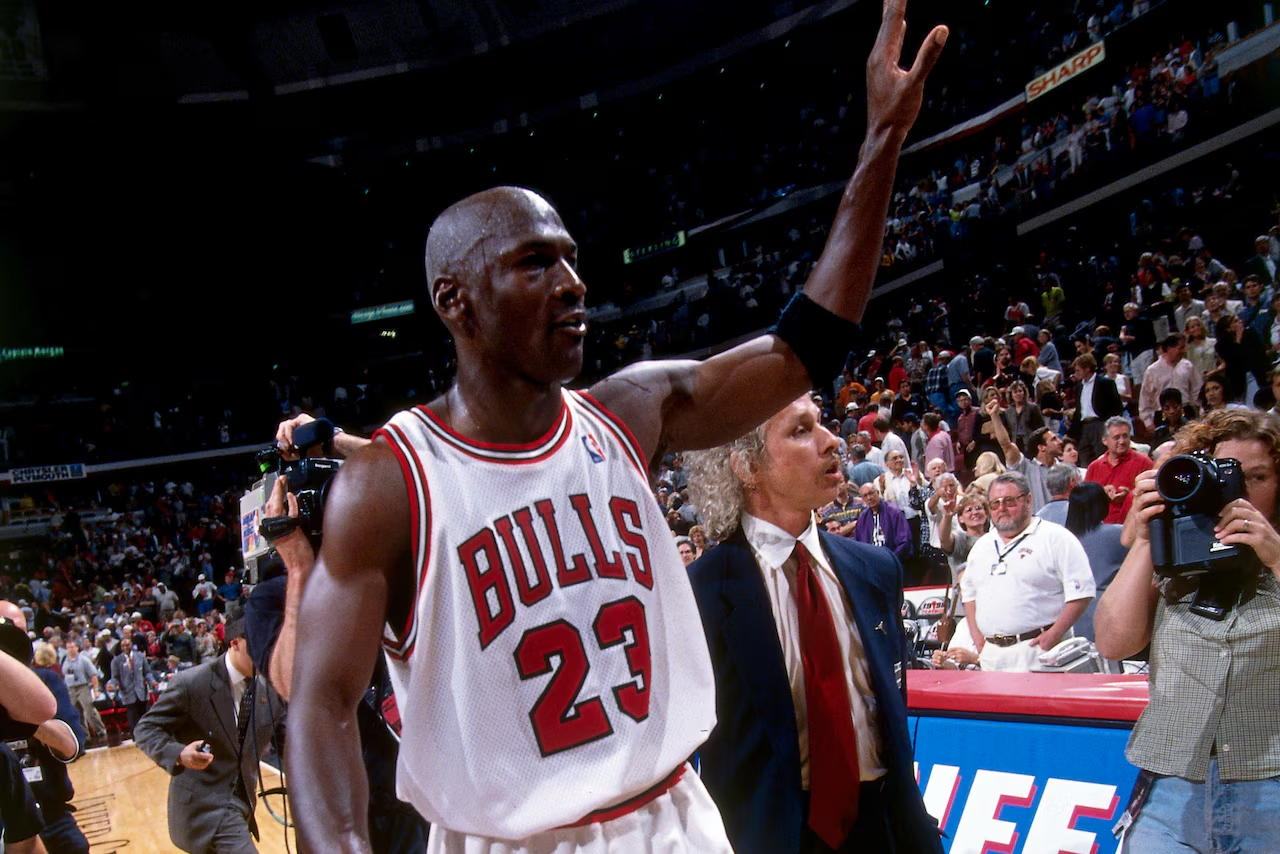

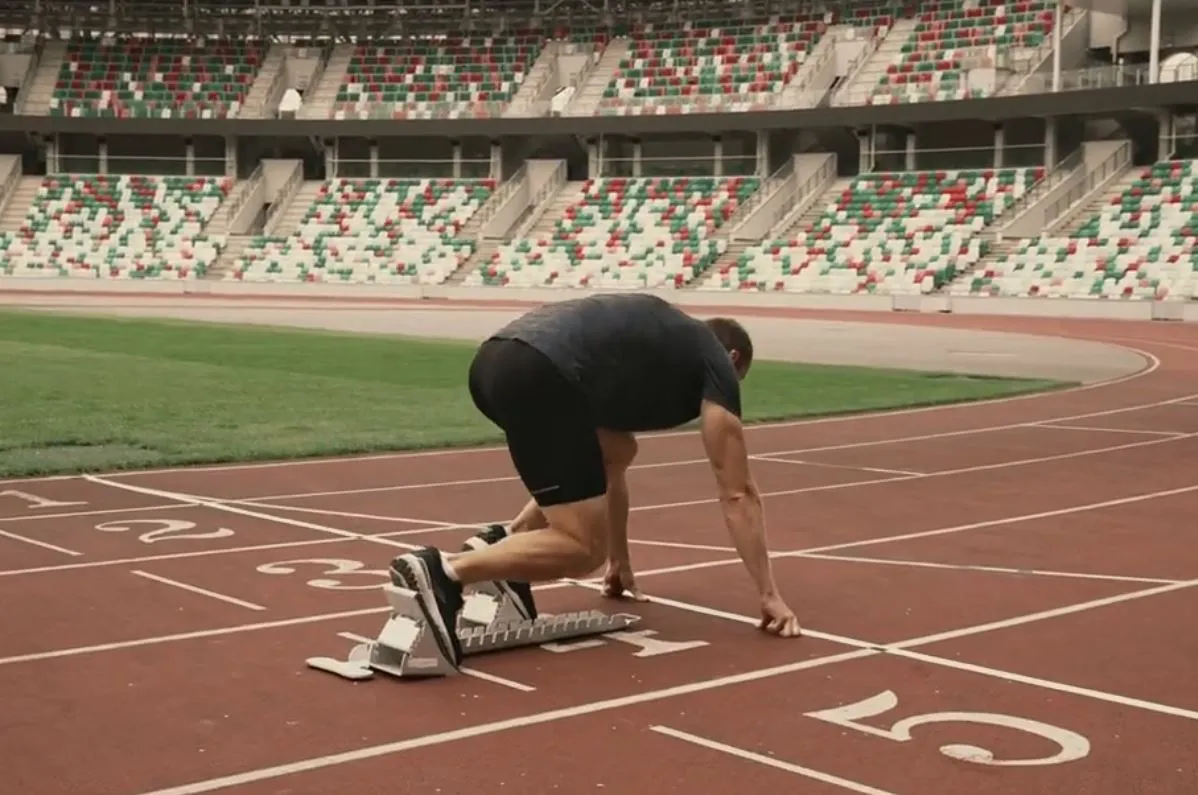
The fastest races in Olympic track do not last long enough for doubt to settle in. You blink, the field has already separated, and the clock turns into the harshest judge in sports. Olympic sprinting world records fascinate American fans because they look simple from the couch: run straight, stay relaxed, cross the line first. Then you see the numbers. Usain Bolt’s 9.58 in the 100 meters. Florence Griffith Joyner’s 21.34 in the 200. Wayde van Niekerk’s 43.03 from lane eight in Rio. These are not casual targets. They are tiny windows where talent, weather, track surface, race pressure, body shape, and timing all lined up.
That is why the conversation keeps returning. Not every record feels equally breakable. Some sit on the sport like locked doors. For readers who follow American track, Olympic trials, and the bigger sports media cycle through trusted sports coverage and athlete analysis, the question is not only who can run faster. It is whether the sport has already touched the edge of what a clean, healthy human body can do.
The Clock Is Not the Only Opponent Anymore
A sprint record looks like one athlete beating everyone else, but the real fight is against conditions that rarely cooperate. The wind must help without crossing the legal limit. The start must be sharp without triggering a false start. The athlete must hit top speed without tightening up. At the Olympic level, the difference between history and second place can hide inside one poor foot strike. That is why Bolt’s records still feel taller than their raw numbers suggest.
Why Bolt’s 100m World Record Still Looks Out of Reach
The 100m world record is brutal because there is almost no space to fix an error. A slow reaction does not end the race, but it steals ground that must come back at full speed. That costs energy. It also changes rhythm. By 60 meters, the best sprinters are not “trying harder.” They are trying not to lose the shape that made them fast in the first place.
Bolt’s 9.58 from Berlin in 2009 still feels strange because he did not look frantic. His stride opened while others began to fight the track. Many American fans grew up watching powerful starters who attacked the race like a football snap. Bolt showed the opposite lesson. At his best, speed looked almost loose.
That is the quiet catch. Future sprinters may be stronger in the gym and sharper in training, yet strength alone does not solve the 100. The body has to produce force, then get out of its own way. A runner can win the Olympic final with aggression. Breaking that mark asks for violence without visible strain.
Why the First 30 Meters Decide More Than Fans Think
Most fans watch the final 40 meters because that is where the race looks dramatic. Coaches often stare at the first 30. That early phase sets the body angle, foot contact, and spacing that decide whether top speed arrives cleanly. A sprinter who rushes upright may look explosive for a second, then pay for it after halfway.
This is where the 100m world record becomes harder to chase than it seems. You cannot simply start faster and hold the same finish. Sprint mechanics do not work like a video game slider. Push too hard early, and the hips rise wrong. Stay too patient, and the race leaves you behind.
The non-obvious truth is that the record may need a sprinter who looks less urgent than fans expect. The next threat may not be the loudest starter in the blocks. It may be the athlete who spends the first steps with icy control, then turns the middle of the race into something no one can answer.
Why Sprinting World Records Feel Closer to a Physical Ceiling
The deeper you look at elite sprinting, the less it feels like a contest of desire. Everyone in an Olympic final wants it. The gap comes from rare body math: limb length, tendon stiffness, hip position, reaction skill, and the ability to relax while moving at speeds most people cannot imagine. That mix does not appear every generation. Sometimes it skips one. Sometimes it skips two.
The 200m Olympic Record Shows How Rare Perfect Curve Running Is
The 200m Olympic record carries a different kind of pressure because the race begins on a curve. You are not only sprinting. You are managing force while your body wants to drift outward. The inside shoulder, hips, and foot placement all matter. If the curve burns too much energy, the straight becomes a slow leak.
Florence Griffith Joyner’s 21.34 from Seoul still stands because it paired explosive speed with a rare ability to keep form under pressure. Shericka Jackson later came close, which proved the mark is not myth. Yet “close” in sprinting can still mean a mountain. Seven hundredths of a second looks tiny on paper. On the track, it can be several years of work with no promise attached.
For American fans, the record also carries a strange tension. Flo-Jo is part of U.S. Olympic memory, style, and speed culture. Her mark is admired, questioned by some, defended by others, and still sitting there. The 200m Olympic record has become more than a time. It is a test of whether modern sprinting can match one of the sport’s most electric nights.
The Body Has to Survive the Speed It Creates
The 200 is often described as a longer sprint, but that undersells the pain. The race asks for near-max speed twice: once while bending around the curve, then again when the legs begin sending warning signals down the straight. A 100-meter specialist can chase pure acceleration. A 200-meter runner has to ration violence.
That is why the 200m Olympic record may fall only when an athlete finds the rare middle between power and patience. Go too hard too soon, and the final 30 meters turn ugly. Save too much, and the record is gone before the straight. The event punishes both panic and caution.
The counterintuitive part is that better training can sometimes make the target feel farther away. Modern athletes race through packed seasons, media demands, sponsor events, and national trials. They may have more recovery tools, but they also carry more schedule noise. A record night needs a body that arrives not only fit, but fresh enough to risk everything.
The 400 Meters Punishes Speed in a Different Way
The 400 is where sprinting stops feeling clean. It starts with speed, then becomes a private argument between the brain and the legs. You can hear the crowd, but the race turns inward by the final bend. That is why Wayde van Niekerk’s 43.03 from Rio still feels almost rude. He ran from lane eight, with no one outside him to chase, and still broke Michael Johnson’s long-standing mark.
Why Wayde van Niekerk’s Lane Eight Run Still Feels Absurd
Lane eight should not be a gift in the 400. You run blind for much of the race, unable to judge the field in the usual way. Most athletes want visual feedback. They want to sense when someone moves, when the pack tightens, when the race changes mood. Van Niekerk had to build the whole thing from feel.
That is one reason the 400m sprint record has such a strange hold on people. It was not set from a perfect tactical seat. It came from the lane that often makes athletes uneasy. He opened fast, refused to fade in the way the event demands, and hit the line in a time that still looks almost misplaced next to the rest of history.
American fans understand the weight of that mark because Michael Johnson’s 43.18 once felt untouchable. Johnson’s upright style, gold shoes, and 1990s dominance shaped how a generation saw the 400. Van Niekerk did not nibble at that legacy. He broke through it.
Why the 400m Sprint Record Is More Than a Fast Lap
The 400m sprint record is not only about who has the fastest top speed. It is about who can spend energy at the least damaging moments. Run the backstretch too gently, and the record disappears. Attack it too hard, and the last 80 meters become survival. The best 400 runners do not avoid pain. They meet it at the right time.
This is why comparing the 400 to the 100 can mislead people. A 100-meter runner may lose form because of pressure. A 400-meter runner loses form because the body starts fighting basic chemistry. The legs fill, the arms tighten, and the track suddenly feels longer than it looked at the start.
The non-obvious insight is that a future record breaker may not look faster through 200 meters than past champions. The athlete may look calmer. Better distribution, not louder speed, could be the path. In the 400, the bravest move is sometimes refusing to show the effort too early.
Relays Prove the Team Record May Be the Hardest Target
Individual sprint records are rare. Relay records are even stranger because four athletes have to share one perfect race. A team needs speed, timing, trust, and clean hands under Olympic pressure. One runner can be in lifetime shape and still lose everything if the baton arrives too early, too late, or at the wrong angle. Jamaica’s 36.84 in the men’s 4×100 at London 2012 remains a reminder that team speed has its own rules.
The Baton Exchange Is a Speed Skill, Not a Side Task
Casual viewers often treat the baton like a detail. Coaches know better. The baton does not move by magic. It slows when athletes mistime zones, reach awkwardly, or panic. A relay team can have four brilliant sprinters and still run slower than a group with cleaner exchanges.
That is why Jamaica’s London run hit so hard. Nesta Carter, Michael Frater, Yohan Blake, and Bolt did not merely run fast legs. They kept the race alive between bodies. The baton moved with purpose, and Bolt received it with enough room to turn the anchor leg into a closing statement.
The American lesson is uncomfortable. The United States has produced deep sprint talent for decades, yet relay history includes painful misses, dropped batons, and zone mistakes. Talent gets you into the conversation. Habit wins the exchange zone.
Why American Talent Does Not Always Mean a Faster Team
U.S. sprint depth can create a problem that smaller teams may not face as often. The lineup changes. Stars peak at different times. Trials pressure reshapes the pool. Injuries alter the order. A relay record needs four runners who do not act like four solo brands for one night.
That is why American track and field training guide content often focuses on more than raw speed. Relay success needs shared reps. It needs clear roles. It needs athletes who can run blind, trust a mark, and resist the urge to look back when the stadium gets loud.
The counterintuitive point is that the fastest country on paper may not be the safest pick to break the relay mark. The team most likely to threaten it may be the one with fewer lineup debates and more shared rhythm. In sprint relays, chemistry is not a soft idea. It shows up on the clock.
Conclusion
The records that feel impossible do not survive by accident. They sit at the meeting point of rare talent, clean execution, and a day when pressure did not shrink the athlete. That is why fans keep circling these times. They are simple enough to memorize and hard enough to haunt the sport.
Still, history warns against calling any mark permanent. Track keeps producing athletes who change the mood of an event before they change the clock. The next threat to Olympic sprinting world records may come from a college star at the U.S. trials, a Jamaican teenager with unreal turnover, or a 400 runner who learns how to hide pain one bend longer than everyone else.
The best way to watch is not to wait for one magic number. Watch the shapes. Watch the first 30 meters, the curve, the exchange zone, the final lift off the turn. For deeper background on how legends are built over time, follow history of Olympic track legends. The clock tells the ending, but the record starts long before the finish line.
Frequently Asked Questions
Why are Olympic sprint records so hard to break?
Elite sprint records require more than speed. The athlete needs legal wind, sharp reaction, clean mechanics, peak health, and a final-round mindset. One small error can erase the tiny margin needed for history, even when the runner is in career-best shape.
Who holds the fastest 100 meters time in history?
Usain Bolt holds the fastest official 100 meters time at 9.58 seconds, set in Berlin in 2009. The mark still stands because no other sprinter has combined his top speed, stride length, relaxation, and race execution at that level.
Can Noah Lyles break Usain Bolt’s 200m record?
He has moved closer than most modern sprinters, but Bolt’s 19.19 remains a huge target. Lyles would need a near-perfect curve, strong weather, sharp health, and a finish that holds form under record-level pressure.
Why is Florence Griffith Joyner’s 200m record still standing?
Her 21.34 from Seoul 1988 paired rare acceleration with strong curve control and a huge finish. Several great sprinters have chased it, but the gap remains hard because the 200 demands speed endurance, balance, and timing in one race.
Is the men’s 400m record harder than the 100m record?
It may be harder in a different way. The 100 rewards acceleration and top speed, while the 400 demands speed under heavy fatigue. Wayde van Niekerk’s 43.03 asks a runner to stay fast while the body is starting to break form.
Why do relay records depend so much on baton passing?
The baton must keep moving near sprint speed through each exchange. A poor handoff can waste more time than a faster runner can recover. Clean spacing, trust, and repeated practice matter as much as the names on the team sheet.
Which sprint record is most likely to fall next?
The women’s 200 may be one of the more realistic targets because recent athletes have moved closer to Flo-Jo’s mark. Still, “realistic” does not mean easy. A record attempt needs the right race, weather, health, and pressure response.
Do better shoes and tracks make sprint records easier now?
They help, but they do not solve the whole race. Modern tracks and spikes can improve energy return and traction, yet records still depend on mechanics, timing, and the athlete’s ability to stay relaxed at peak speed.